Cristina operates Premium of the Plastic Artist Ruiz
EXCELSIOR. January Tuesday 6th, 2004
Alfonso de Neuvillate .
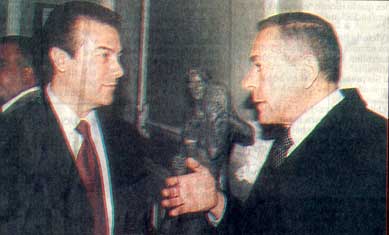
In the cultural center "Casa Lamm", they met but of 200 distinguished attending ones; personalities of literary means of Mexico and the foreigner and mass media, to know the "ópera prima" of the recognized plastic artist Cristina Ruiz, who now with this its first work, incursiona in the scope of the contemporary Literature of our country. Cristina Ruiz from very young spills her artistic vein in her manuscripts and their poems, but she is not but until now that sees fulfilled its dream, when shaping with all the passion and intensity that characterizes it, all the emotions that turn around the love in their book "Canto to amor". Poetic Metafórica and is imposing its style to the most demanding readers; "Canto to amor" it is a song, a moan, an exigency and a rebellion as opposed to all the lack of this one, the noblest and beautiful feeling of the human being; it is a sweet and simultaneously bitter work; a poetic work of encounter and solitudes, love and lack of affection; one by one their poems take irremediably to find to us us with passages of our own life; it is balsam and penance, is briefly a book that opens parteaguas in the modern and always present poetry. They directed to memorable words to the artist and their work Mr. Eduardo of the Bristle, publisher of the book and Alfonso de recognized Neuvillate critical of art. Also the artist Cristina the Ruizes was thankful specially to those who supported it to make this work possible, with the knowledge emotion that this will be a book of which it is spoken by a long time; the radio conductor, Liz Fertile valley read to presents four of most beautiful poems extracted of "Singing to Love". For Alfonso de Nueuvillate, Cristina Ruiz "la painter of amor" it is imposing its more demanding, more obstinate style and its plastic forms to accept the truth of the human body and its emotions, feelings, worldly, true, undeniable actions, that simply are. Cristina Ruiz makes painting and there same she makes music. In its territories of elegant sensitivity they exist resabios of Debussy and Ravel, of Satie and the "presto with fuoco" of Mallarmé poet. Only in her sort, in spaces more musical than pictorial, Cristina Ruiz is imposing his, plagued painting of mythical symbols, like can be the one of the hope and the subliming, Cristina Ruiz, painter of the light and the dark of the soul, the perversions and the sacralización of the hug and good bye, like in goods bye of pinto Beethoven with absolute freedom and absolute conscience from which its work is going to arrive to the center of the sensible being, intelligent, which does not try to hide her more beautiful emotions, nor most horrifying, but to find that path of beautiful mysteries. In their encounter and mix-ups, like in the found paradises of red, or in the desert deserts, or those territories of luminous warnings, the beings who she arranges are spiritual triumphs and glorifications of the being. As in the soneto of Villaurrutia they make pairs, they go away, they move away, they are desired, they disappeared. They are dumb, quiet figures, reflected of the human condition. The vision of the feelings that has and shapes in its pictures Cristina Ruiz is magnificent. It reconciles with the resemblances and, seeing it well, wittingly, the only way to return to believe in the man and the woman who, undressed of badly, like in a new paradise of ludismos and storms, convergences and divergences, starts again her possibility of being until not being. Everything can be. Wishing and loving again. Later upon presentment of the book, a cocktail in beautiful hall' was offered; of House Lamm, which still more beautiful Lucia, because in, their walls hung eight of the most recognized pictorial works of Cristina Ruiz and in individual pedestals, two of the most representative sculptures of the art and sensitivity of the artist; during this act Cristina Ruiz I sign some of its books to the presents. The evening culminated to the edge of the 22:30 hours; night total of art and feeling, which it left to those who met with the restlessness of an encounter through the letters, with the love.
Marco Antonio Zepeda and Alfonso de Neuvillate. |